
Transcript:
My name is Charles Condon, and I am the director of manufacturing at Rowdy Mermaid. We are a manufacturer of kombucha. Our mission is to get sustainably sourced plant medicine to as many people as we can. We really focus on the function of the ingredients that we put into our kombucha, so it goes beyond kombucha as just a simple product. We try to use as many ingredients as possible that have health benefits and are good for you. We want to make a beverage that’s good for people and is a healthy alternative to basically everything else out there.
Rowdy Mermaid has been in business for six and a half years now. We’re trying to get probiotics in kombucha to as many people as possible with healthy, flavorful, organic ingredients.
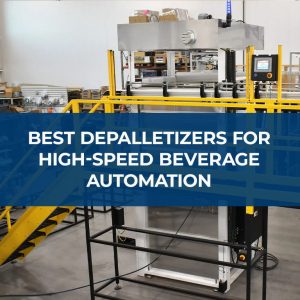
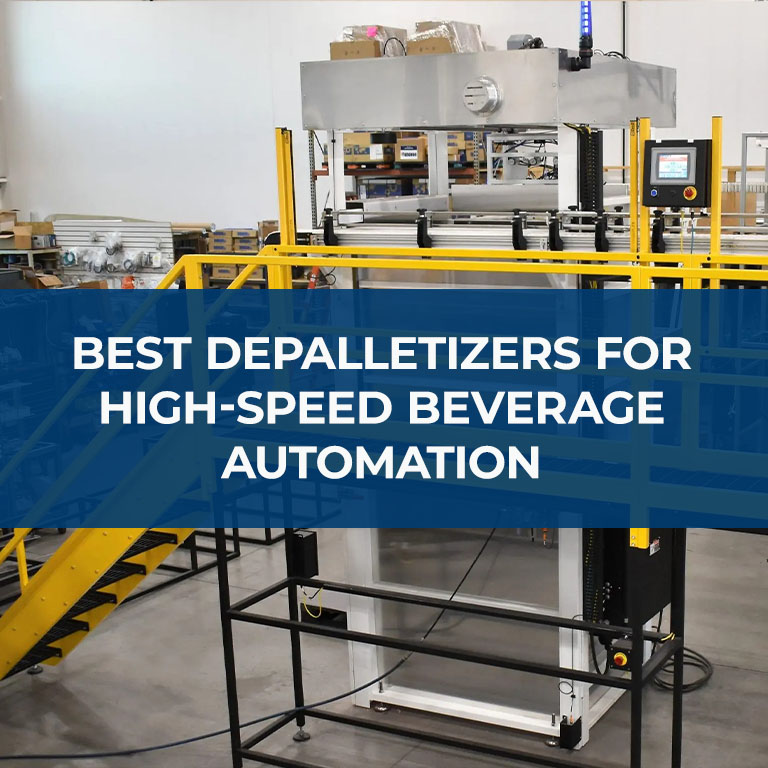
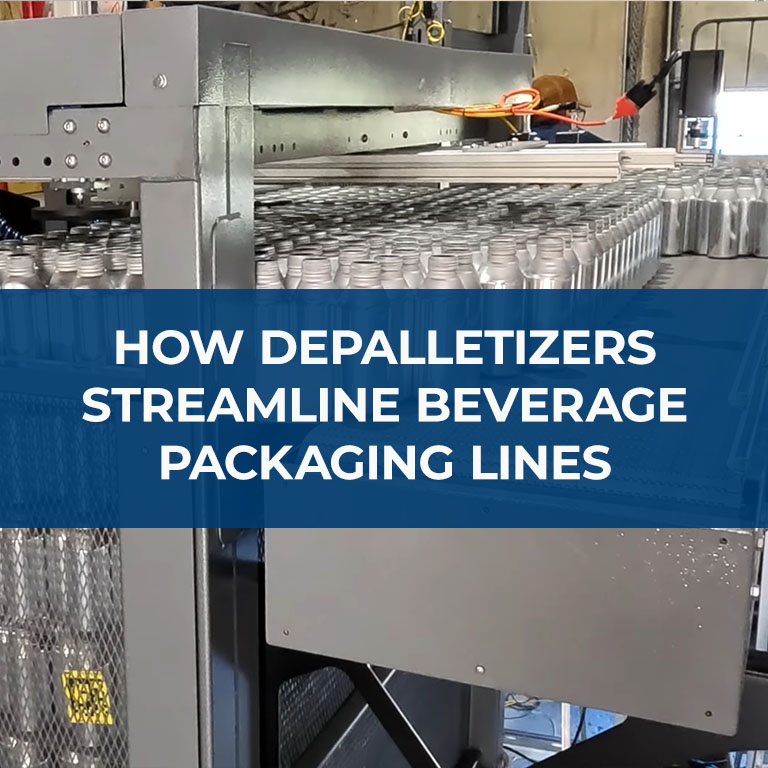
For the beginning of the packaging line, it can be a big choke point. The old way we used to do things was hand loading bottles, which meant that however fast you could handle bottles was how fast you were producing. Now we can produce much faster, even faster than the machines can run based on our current Ska depalletizer. I bought my canning line through Pneumatic Skill Angeles, and they put together a package of equipment with the Ska depal as part of it. I come from the beer industry, so Ska is a really well-known name there. I’ve spoken to countless brewers who have used equipment from Ska, and they come with a good reputation. When I saw them as part of the package, I felt very confident about that choice.
The choice to go into cans really made a lot of sense for us as a company. A big part of our mission is sustainability. After doing lifecycle analysis and reading a lot of research and papers on the sustainability of glass versus aluminum, we really decided that aluminum was the right package for us. That was a very easy decision because it’s in line with our company mission. Coming from the beer world, I’m very pro-can. I think it is a better package for the product.
Before, we could put about six bottles on by hand as fast as you could load them, which is about 18 bottles a minute. Currently we can run up to 120 to 130 cans per minute off the depalletizer. That means we’re no longer restricted by how fast someone at the beginning of the line can manually load bottles. The jump in packaging equipment for us was a big one, and I think it took people by surprise on my team. But honestly, the transition was very smooth from our perspective. The bottling line we had was much more high-maintenance machinery than what we went to. Even though we’re running three or four times the speed, it takes about the same amount of effort to accomplish that.
We have extended our shelf-life since going into cans. I think cans were part of that, along with upgrading the quality of our packaging equipment. But also, it’s just less annoying work. The depalletizer—for example, we used to load all the bottles onto our other machine manually. We didn’t have any sort of depalletizing machine, so someone’s job was literally to stand there and take bottles off the pallet and load them onto a table. The depal allowed us to take an entire person and move them to somewhere they could be used better. We’ve been able to double production on a daily basis with half the man-hours of production. That’s been a great number for us.
This is a brand-new facility for us. Production has only been here for about two or three weeks. This move is in anticipation of some pretty rapid growth. We’re really going to be pushing hard in the next year or two. Luckily, with the depal we bought, it’s going to provide us with the beginning of the line for our current canning line and any future canning lines we might have, because we bought a depal that works a little bit faster than our current machinery. We can expand as we’re planning to do so we can produce even more kombucha in advance. We are very happy with our Ska depalletizer. I would recommend Ska fabricating machinery.