Beverage producers face constant pressure to meet demand without slowing output. Front-of-line equipment sets the production pace, so depalletizer performance shapes downstream efficiency from the first pallet.
Delays at unloading create bottlenecks that can reduce uptime and put order schedules under added strain. Automated systems protect bottles and cans through precise, repeatable motion instead of uneven manual contact, reducing damage and unnecessary waste at the start of the line.
Better unloading performance can optimize labor allocation, reduce physical strain on the operator and support more reliable operation across extended production shifts.
The Front-of-Line Bottleneck in Modern Beverage Manufacturing
Many beverage plants still rely on manual or semi-automatic unloading at the start of the line. Modern fillers and labelers can outpace those methods, creating a speed mismatch that holds back overall line performance. Depalletizing delays can leave downstream equipment idle and reduce available throughput.
Why the Growing RTD Market Demands High-Speed Solutions
Ready-to-drink (RTD) beverage growth is raising output expectations across fast-moving categories. Energy drinks accounted for 17.59% of the RTD drinks market in 2025, driving more single-serve cans and bottles into the convenience and on-the-go channels. Higher unit volume means more pallets arrive per shift.
Short delays during pallet changeovers can leave fillers waiting for the next container supply. High-speed depalletizing helps maintain a consistent feed rate by moving single-serve containers into production at speeds that match downstream equipment. Beverage producers can achieve tighter line balance and better use of scheduled runtime.
What Defines an Authoritative Depalletizer in the Beverage Space?
An authoritative depalletizer brand demonstrates a proven record on demanding lines. Beverage producers look for evidence that a system can maintain speed, support uptime and perform reliably with cans, glass bottles and plastic containers.
The Critical Role of High-Speed Output
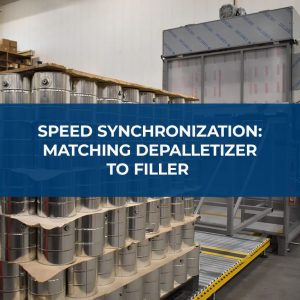
High-speed output protects the value of downstream equipment by keeping container supply aligned with the production demand. When pallet unloading falls behind, fillers and packers sit idle instead of running at the speeds those machines were designed to maintain.
A depalletizer with stronger, sustained output helps prevent those slowdowns. Continuous automated transfer reduces the small stop-and-start interruptions that manual loading may create during active runs.
Predictable throughput gives production teams a firmer basis for scheduling labor and planning changeovers. Advanced systems offer another advantage through controlled sweep motion, allowing bottles or cans to move with less shock and a lower risk of spills or breakage.
Reliability and Seamless Integration on the Line
Reliability carries as much weight as speed on a drinks line. Peak output means little when a depalletizer cannot maintain stable performance through long runs or restart cleanly after a brief interruption.
Strong conveyor integration helps create a usable accumulation buffer, so a small downstream disruption does not shut down upstream container flow. Consistent movement protects the line stability. Fewer abrupt starts reduce tip-overs, limit mechanical stress and improve container control during transfer.
A synchronized programmable logic controller enhances performance by matching infeed speed to downstream demand in real time. Consistent machine response enables smoother container flow through the discharge zone.

Features to Look for in High-Speed Beverage Depalletizers
The best depalletizers for high-speed beverage automation protect throughput under pressure. Features such as automatic layer removal, multiple pallet infeed and programmable controls help keep container flow continuous as the line speed increases.
Multiple Stock-Keeping Unit (SKU) Flexibility
Container-type flexibility matters when plants run cans, polyethylene terephthalate (PET) bottles and glass on the same line. A depalletizer should move between container types on a single platform without mechanical changeovers between SKUs.
Compatibility with common inbound pallet sizes matters just as much. Equipment should accept 44-by-56-inch pallets and 48-by-40-inch pallets directly at the infeed, so operators can start unloading without repalletizing loads to fit the machine. Elevation detection and layer indexing should automatically adjust for container height and pallet build.
Stored product presets should let operators pull up format specification settings through the human-machine interface, reducing changeover time while keeping transfer motion matched to each package type.
Advanced Automation and Labor Optimization
Advanced automation improves depalletizer performance by tightening control at the front of the line. Automated slip-sheet removal and top frame removal reduce repetitive unloading tasks, giving packaging teams more time for line monitoring and quality work. Other automated functions include:
- Sweep-motion technology, which moves a full layer in a single controlled pass, reducing sudden impact during transfer from the pallet to the conveyor.
- Automatic bulk layer discharge, which starts when downstream photo eyes confirm available conveyor space, helping maintain stable flow at higher operating speeds.
- Integrated sheet and frame removal, which uses integrated vacuum systems to remove tier sheets and top frames into dedicated storage.
- Programmable logic controller operation, which gives operators clear machine status and fault visibility through interface screens, diagnostics and stack lights.
Top High-Speed Depalletizer Solutions for Beverage Brands
Many of the best depalletizers for high-speed beverage automation operate at different levels of automation. Compact automatic systems fit tighter floor plans, while full-height systems support heavier output across longer production runs. Synchronized controls help each machine respond to downstream conditions, reducing jams or micro-stops.
MAB Depalletizer: Built for Maximum Speed and Aluminum Cans
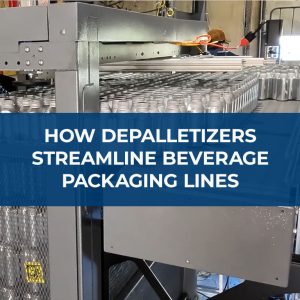
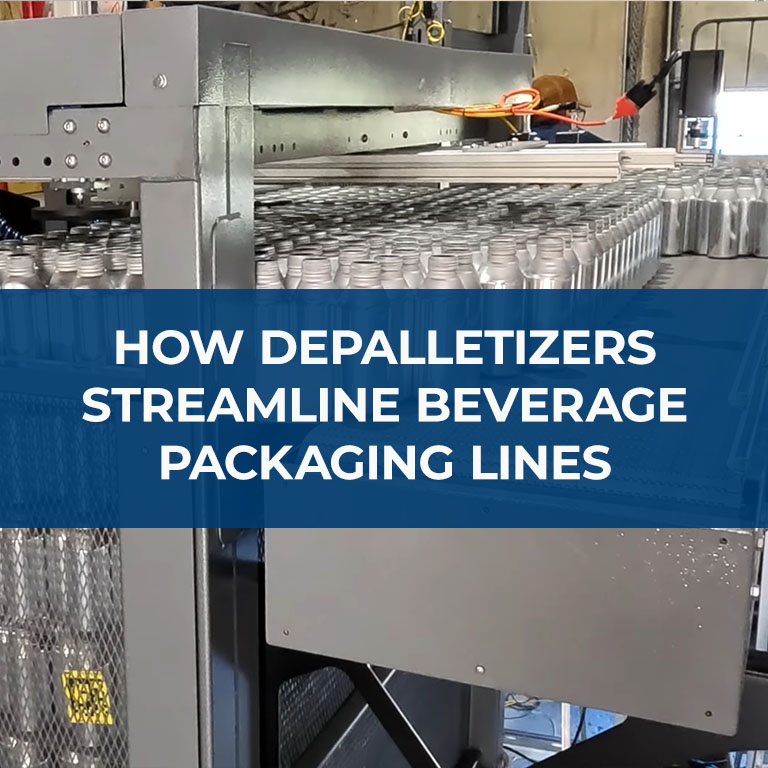
The MAB depalletizer is designed for high-speed, elevation height operation with aluminum cans, bottles and other metal beverage containers. Its automatic design enables continuous product flow and compact pallet handling on high-volume lines. Its features include:
- Dual-pallet infeed, which queues the next pallet before the active pallet clears, maintaining a continuous container supply.
- Automated frame and sheet handling, which clears top frames and tier sheets from the pallet during the depalletizing cycle.
- Empty pallet stacking, which collects up to six empty pallets into a single stack for cleaner pallet handling during operation.
- Controlled sweep transfer, which uses a belt-driven sweep actuator to move full layers smoothly onto the conveyor.
- Centralized controls, which give operators access to machine status, commands and adjustments through a dedicated control interface.
- Fast height changeover, which lets the operator change the container height on the screen, eliminating the need to reposition sensors.
FHA 5000: High-Speed Flexibility for Diverse Container Types
The FHA 5000 is built for beverage lines that process plastic, metal and glass containers from full-height pallets. Heavy-load capacity, high-level discharge and flexible format handling make it a practical fit for plants that need broad container compatibility without frequent manual intervention between runs. This machine offers:
- High-level discharge: It feeds containers at a 120-inch discharge elevation for alignment with overhead conveyor systems.
- Precise vertical positioning: This machine uses a four-point cable lift control and layer indexing.
- Demand-based discharge: It starts the sweep only when a downstream photo eye confirms available space on the line.
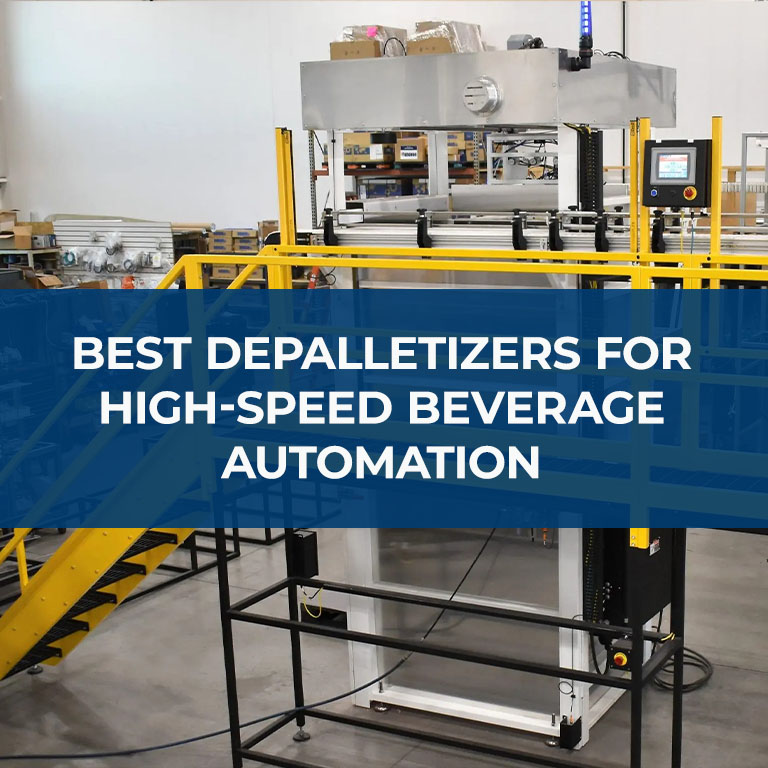
- Control system access: It has a 7-inch human-machine interface, manual and auto models, stack lights and integrated diagnostics.
- Preset changeover: You can store up to 20 product presets for toolless changeovers between container types.
FHA 3000: Automated Efficiency for Lightweight Containers
The FHA 3000 is designed for lines that run lighter containers and need full-height automation in a tighter footprint. Its compact layout supports efficient pallet unloading while giving plants a full-height option for aluminum cans, PET containers and fiberboard. This lightweight container machine offers:
- Impressive lift capacity: This machine supports pallet loads up to 1,000 pounds during full height operation.
- Automated slip-sheet removal: It clears separator sheets with an integrated pneumatic system to reduce manual handling during operation.
- Preset-based changeovers: You can store format settings in the control system to reduce adjustment time between runs.
Optimize Your Beverage Line With Ska Fabrication
Ska Fab provides depalletizer solutions designed for high-speed beverage lines, from can-specific systems to flexible platforms for glass, PET and other container types. Browse our depalletizers or contact our team to discuss a solution aligned with your throughput targets, floor plan and container mix.