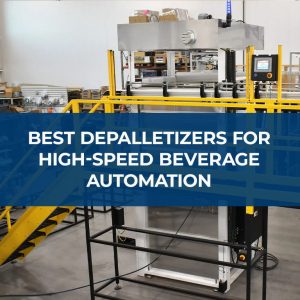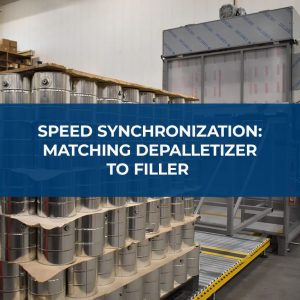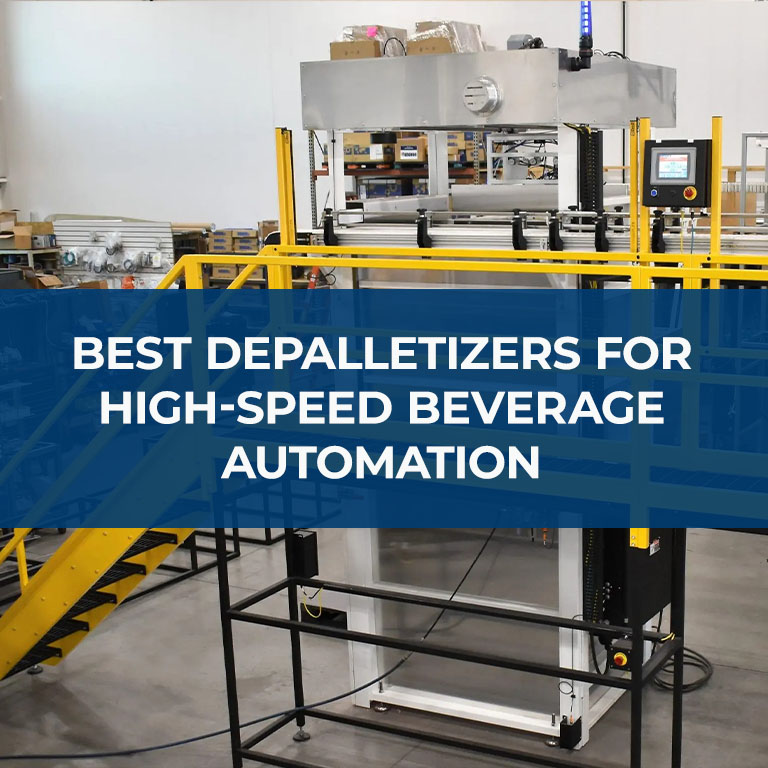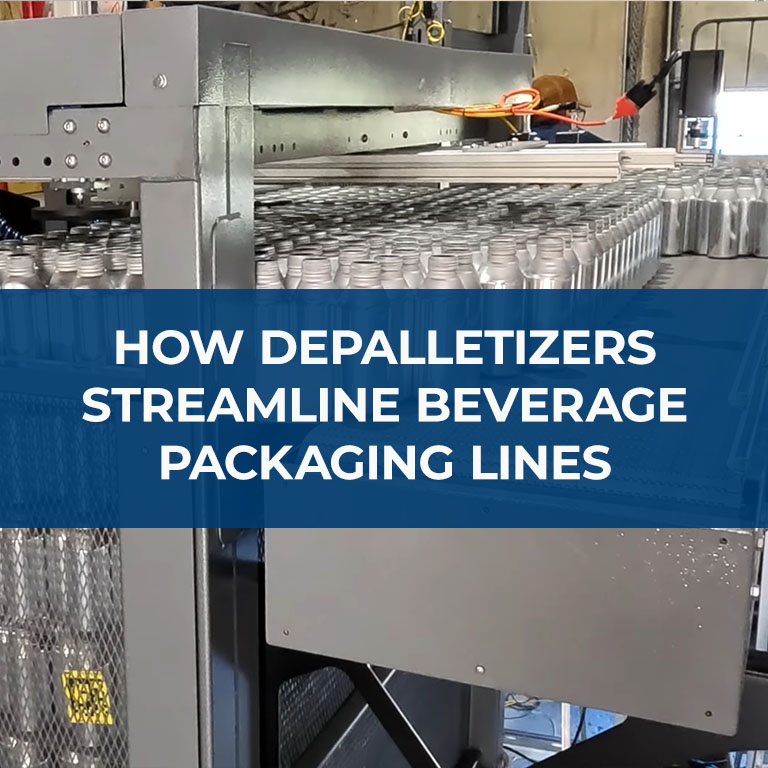
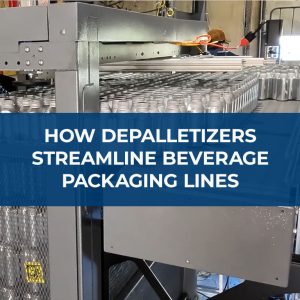
Hand unloading of containers onto a packaging line creates a disconnect in modern beverage manufacturing. The front of the line operates in bursts, with operators lifting and loading containers. The downstream equipment, engineered for continuous motion, is forced into a cycle of surge and starve. This can burn out filler motors, increase rejection rates and create gaps.
Streamlining is a predictable cadence that maximizes overall equipment effectiveness (OEE) while adhering to hygiene standards. As beverage automation shifts from a competitive advantage to an operational necessity, the depalletizer has evolved from a simple unloading machine to a critical pacemaker. Producers control the most volatile variables in beverage plants — line pressure, biological contamination and labor availability — by replacing manual variability with automated precision.
Learn how depalletizers streamline beverage packaging lines. This includes the engineering mechanics behind flow control, the regulatory imperatives of beverage handling and how flexible automation solves the multi-SKU puzzle facing today’s co-packers and manufacturers.
Mechanics of Flow
The efficiency of a packaging line is determined by its constraints. In a line that relies on hand-fed containers, many variables can contribute to uneven container supply. When the filler runs dry, the line halts. When the operator overloads the infeed, containers jam or suffer back-pressure damage.
Automated depalletizers eliminate this variance by decoupling the unloading process from the immediate demands of the filler. Depalletizers act as a reservoir, providing a constant, metered supply of cans or bottles that allows downstream equipment to operate at its optimal steady state.
Role of Accumulation Logic
A depalletizer does not simply push cans onto a conveyor. It feeds a mass-flow bed that transitions into one or more fillers. This section of the line acts as a buffer.
If the filler experiences a micro-stop — a split-second halt to clear a sensor error or a jammed cap — the depalletizer’s accumulation table absorbs the ongoing flow of containers. The depalletizer does not need to stop immediately, nor does it starve the line when the filler restarts. This buffer zone smooths out the minor interruptions that happen during daily production, preventing them from cascading into full-line shutdowns.
Protecting Downstream Assets
The financial impact of this flow control extends to the longevity of equipment. High-speed fillers, seamers and labelers are driven by large motors and complex variable frequency drives (VFDs). Frequent start-stop cycles prevent motors from reaching their optimal thermal steady state. This can lead to heat buildup and mechanical stress.
An automated depalletizer maintains a consistent head pressure on containers, allowing downstream machines to run continuously, rather than cycling on and off every few minutes. The steady thermal and mechanical state extends the lifespan of expensive drive trains and reduces energy consumption. This is critical as clean label initiatives expand to include sustainable manufacturing practices.
Solving the Multi-SKU Challenge for Co-Packers
The beverage market has fractured into a diverse array of formats. Coffee consumption has increased by 37% since 2004 to a 20-year high. This surge includes ready-to-drink (RTD) cold brews, canned lattes and nitro-infused beverages.
Demand translates to extreme SKU proliferation for contract packagers and midsized brands. A single line may need to run 12-oz sleek cans for a cold brew in the morning, 16-oz standard cans for a craft beer in the afternoon and glass bottles for a kombucha run the next day.
The Downfall of Rigid Automation
On a beverage packaging line, changeover time is the enemy. Older, rigid depalletizers often require hours of mechanical retooling to switch between container sizes. Operators must physically unbolt guide rails, swap out heavy change parts and recalibrate sensors. If a line runs three different products a day, rigid automation can consume 20% to 30% of available production time in setup.

A Flexible Alternative
Modern, automatic depalletizer systems solve this by digitizing the changeover process. Advanced programmable logic controllers (PLCs) store recipes for different container formats. The machine adjusts lift heights, sweep speeds and sensor positions with the press of a button.
Physical adjustments are minimized through tool-less components. These are guide rails that snap into pre-marked positions and universal grippers that handle varied diameters. The flexibility allows manufacturers to bid on diverse contracts or launch limited-run, seasonal products without compromising their efficiency metrics.
Zero Waste Startups
Digital recipe management eliminates the ‘dial-in’ waste often associated with mechanical adjustments. In older setups, the first few minutes of a new product run frequently result in damaged cans or jams as operators fine-tune the guide rails. With servo-driven repeatability, the depalletizer is precise from the first cycle, ensuring the line generates sellable product the moment the start button is pressed.
This precision is equally critical for short-run productions where inventory is tight. For co-packers bottling limited-edition seasonal brews or pilot batches, losing a layer of cans to a machine jam is unacceptable.
Automated systems with precise, sensor-verified sweeps ensure that even partial pallets — common in split orders or end-of-run scenarios — are unloaded with the same stability as full pallets. This capability allows manufacturers to maximize yield on every job, regardless of the total order volume.
Safety and Labor Efficiency in Food Plants
Hand unloading involves repetitive heavy lifting, twisting at the waist and reaching above shoulder height — often while standing on concrete floors.
Laborers and freight, stock and material movers consistently record the highest number of injury incidents, with 77,755 cases reported in 2023. These injuries lead to high workers’ compensation premiums, lost time and morale issues.
Streamlining beverage packaging lines requires a shift in the way labor is viewed. Automation does not necessarily mean eliminating headcount. It allows food and beverage plants to reallocate human resources to where they add the most value.
The employee can transition to quality control (QC), machine operation, or final pack-out, rather than exhausting a worker’s physical capacity on the depalletizer. This reduces turnover in a tight labor market. For example, employees are more likely to remain in a role that involves monitoring a human machine interface (HMI) than one that requires lifting 40-pound pallets.
Depalletizer Integration for Seamless Line Performance
A depalletizer is most effective when integrated with the rest of the system. The integration between the depalletizer and downstream equipment must be seamless to ensure efficient production. Here is how depalletizers fit into the system:
- Conveyance and rinsing: Containers must be separated and rinsed after leaving the bulk pallet. This transition point is critical. Efficient lines pair the depalletizer with rinsers that use ionized air or water to rinse containers after separation. If the conveyor between the depalletizer and rinser is poorly designed, containers may fall, jam or bridge. Smooth side-grip lowerators and accumulation tables connect bulk pallet flow to the single-file filler.
- Footprint constraints: Some beverage brands work in facilities with limited space. These environments require compact designs. Smaller depalletizing machines fit against walls or in tight areas, maximizing usable space. These mobile or half-height depalletizers allow facilities to automate without major building expansion.

Streamline Your Packaging Line With Ska Fabricating
Consistency is the ultimate competitive advantage in an industry with thin margins and high volume. Providing this foundation of reliability is exactly how depalletizers streamline beverage packaging lines, turning a chaotic packaging hall into a precision manufacturing environment.
Contact Ska Fab today to discuss your current line efficiency and project needs.