
Transcript:
My name’s Ben Parsons. I’m the winemaker and founder of the Infinite Monkey Theorem. The Infinite Monkey Theorem is an old mathematical theory that basically states if you set a monkey to a typewriter and give it an infinite amount of time, it would type the entire works of Shakespeare. It really tests your understanding of infinity and the fact that given infinite time, anything and everything is possible.
In my mind, it’s like a random letter generator banging away at a keyboard. There’s only a certain number of combinations of letters that make words, so given infinite time, a random letter generator—or monkey—would have to type everything that’s ever been written and everything that’s ever been written an infinite number of times. It’s all about creating order out of a chaotic system.
When you think about having a winery in downtown Denver and growing grapes on the western slope of Colorado at four and a half thousand feet elevation with a hundred-sixty day growing season, late spring frost, harsh winters, and hail storms, then driving all that fruit over the mountains and making wine in a warehouse in a back alley in downtown Denver—it’s a chaotic system. But somehow we end up with something that approaches a work of art in a can, bottle, or keg.
In 2007, I decided to start an urban winery in downtown Denver. I managed to find investors at the start of 2008, right when the economy was tanking. We found an old Quonset hut in the Santa Fe Art District, started a winery for very little money, and found used equipment from all over the country. Our first year we did 2,000 cases of bottled wine. In 2009 we started putting wine in kegs, which was pretty new at the time. In 2010 we wanted to start canning wine, so we approached Ball Corporation, just outside Broomfield 26 miles north of us. They were excited about it too, and we entered into a year-long R&D project to determine whether wine would interact with the can lining. After competitive taste testing, they found no significant differences in flavor from month to month. We launched in 2011.
The whole idea was that we’re living in Colorado where people hike, ski, and climb. They want a product they can pack in and pack out, something they can crush down. Aluminum is the most recycled packaging in the world, and Americans are more likely to recycle a can than any other packaging. It’s infinitely recyclable—in sixty days it could be a brand new can or on someone else’s shelf. It fit perfectly with our urban winery model of making wine relevant and accessible. The least pretentious thing you can do with any product is put it in a can.
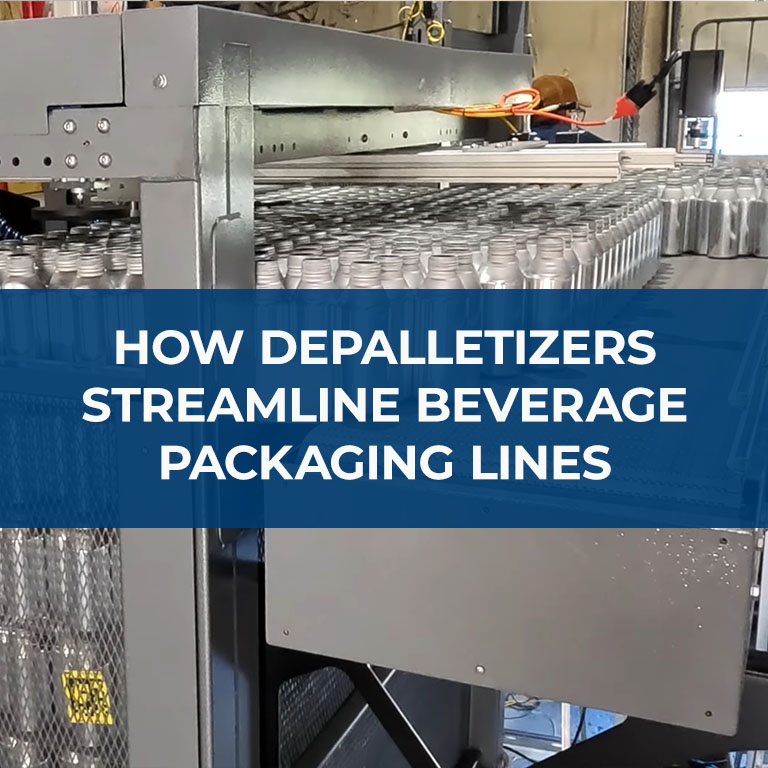
Canned wine is now distributed in 44 states, and we’ve helped a bunch of other wineries put wine in cans. It’s now the fastest-growing category in the wine industry. I could probably name another 250 wineries doing it, all because we started in 2011. When we first started, we had a wild goose canning line, then we brought in a Depal line. Before that we were loading them by hand—they were dropping on the floor and we were wasting cans that cost 14 cents each. It was ridiculous. In 2014 we bought the Depal line, which is way more efficient than hand-loading and damaging every other can.
I started working with SKA in 2014, and they did a great job. The install went really smooth and the lines work great. We use it every week, and it’s gone wrong once in four years. I’d definitely recommend SKA to anyone.
A lot of people’s guard goes up when they think about canned wine. But when you think about the young millennial demographic and people younger than that getting into wine, they’re over the unnecessary pretense and procedure. For us, it was all about making wine accessible to more people. We’ve been doing that since 2008 with the winery name, fun graphics, and just having a laugh with it. I think it’ll continue to grow. As Denver grows, our winery grows. Denver’s the second fastest-growing city in the US. We also have a winery in Austin, Texas, which is very similar, and we’re canning wine there too. We’re in 45 states now and looking at shipping to Taiwan, Israel, and the Caribbean by the end of the year.