
Operational Challenges a Depalletizer Can Solve in Manufacturing and Packaging
Manufacturing and packaging facilities face constant pressure to improve efficiency, reduce downtime, and adapt quickly to changing market demands. From fluctuating order volumes to expanding product mixes across materials like glass, plastic, and metal, operations can easily get bogged down by manual pallet handling. The result is bottlenecks, wasted floor space, and costly delays that limit growth.
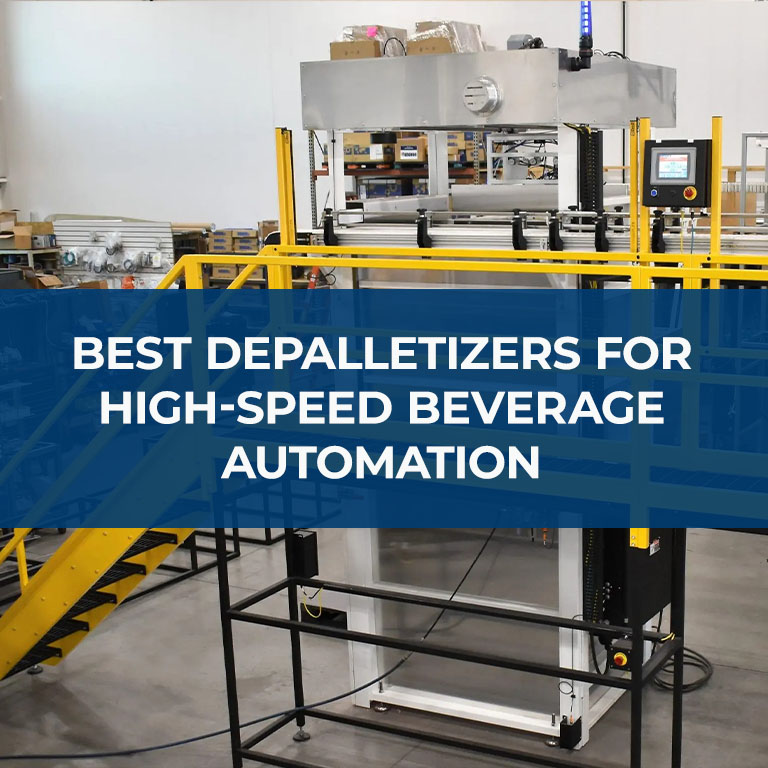
Automated depalletizers directly address these challenges, providing speed, flexibility, and reliability. Here are four common operational problems they help solve.
1. Difficulty Adapting to Fluctuations in Demand
Production demands aren’t static — facilities must respond quickly to new SKUs, demand spikes, or shifts in product mix. Manual pallet and container handling slows these transitions, as workers must rearrange pallets, identify products, and adjust line setups, often taking hours and creating costly downtime.
How a depalletizer helps:
Automated depalletizers reduce changeover times and handle multiple SKUs without manual intervention. This flexibility enables facilities to adapt quickly to demand surges, new product launches, or changes in order volumes while keeping production flowing smoothly.

2. Inconsistent Feed Rates to Downstream Equipment
Downstream processes such as filling, labeling, and packaging require a steady, predictable flow of products. Manual container unloading is inherently variable; some pallets take longer to manage than others, creating uneven feed rates, stoppages, and reduced throughput.
How a depalletizer helps:
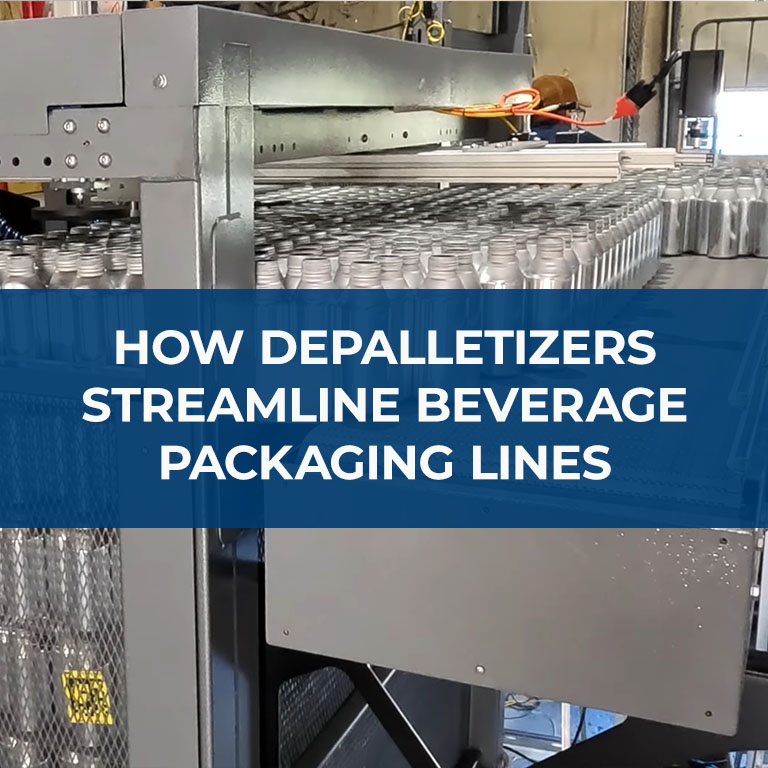
Depalletizers ensure a consistent, controlled product flow to downstream equipment. By precisely unloading products — whether glass, plastic, or metal — they eliminate bottlenecks, maintain optimal line speed, and improve overall production quality.

3. Inefficient Use of Floor Space During Manual Staging
Manual pallet handling requires large staging areas to manage multiple pallets at once. This eats up valuable floor space, reduces operational flexibility, and increases safety risks in busy production environments.
How a depalletizer helps:
Automated depalletizers work directly from storage or receiving areas, eliminating the need for excessive staging. Facilities can reclaim floor space for higher-value operations, streamline workflows, and improve safety without sacrificing throughput.

4. Quick Changeovers and Flexible Material Handling
Facilities that process a mix of materials — fragile glass, lightweight plastic, or durable metal — often face delays when switching between products or formats. Manual changeovers are time-consuming, labor-intensive, and prone to error, slowing production and increasing the risk of damage.
How a depalletizer helps:
Modern depalletizers are designed for quick changeovers and multi-material flexibility. They adjust automatically to different product sizes and formats, enabling rapid SKU rotation and minimizing downtime. This ensures production lines stay agile and responsive to evolving market needs.
Why Your Facility Needs a Depalletizer
Depalletizers solve more than just labor challenges — they address the operational roadblocks that slow down modern facilities. By helping operations adapt to demand fluctuations, maintain consistent product flow, optimize floor space, and achieve quick, flexible changeovers across materials, depalletizers keep production lines running faster, safer, and smarter.
Investing in a versatile depalletization system enhances productivity, reduces costs, and positions your facility for scalable, future-ready operations capable of meeting the challenges of today — and tomorrow.
Trust Ska Fabricating for Your Packaging Solutions
Ska Fabricating manufactures automated solutions for the packaging industry.
Our experienced team of engineering and support experts set the standard across industries such as beverage, consumer packaged goods, and beyond. Learn more about our packaging equipment on our website, or contact us to request more information today.