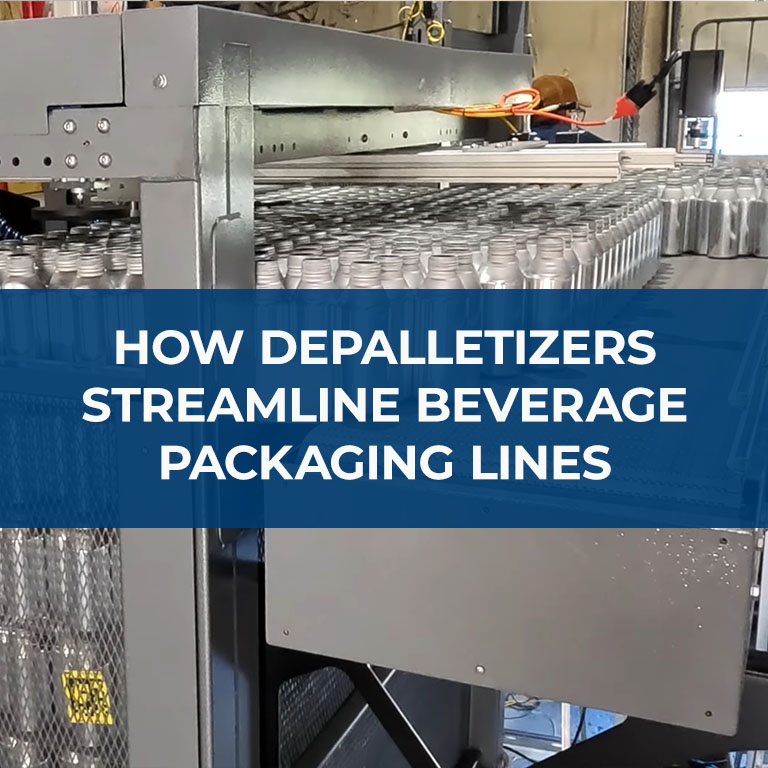

Choose the right depalletizer for your business by weighing up various factors from the height of your pallets to production speed and the material types you are handling. Our guide will outline different depalletizers and focus on which may be best for the materials you work with.
What Is a Depalletizer?
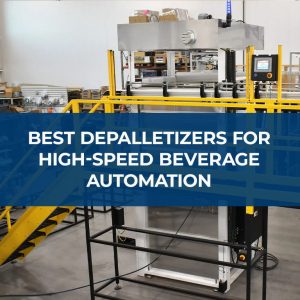
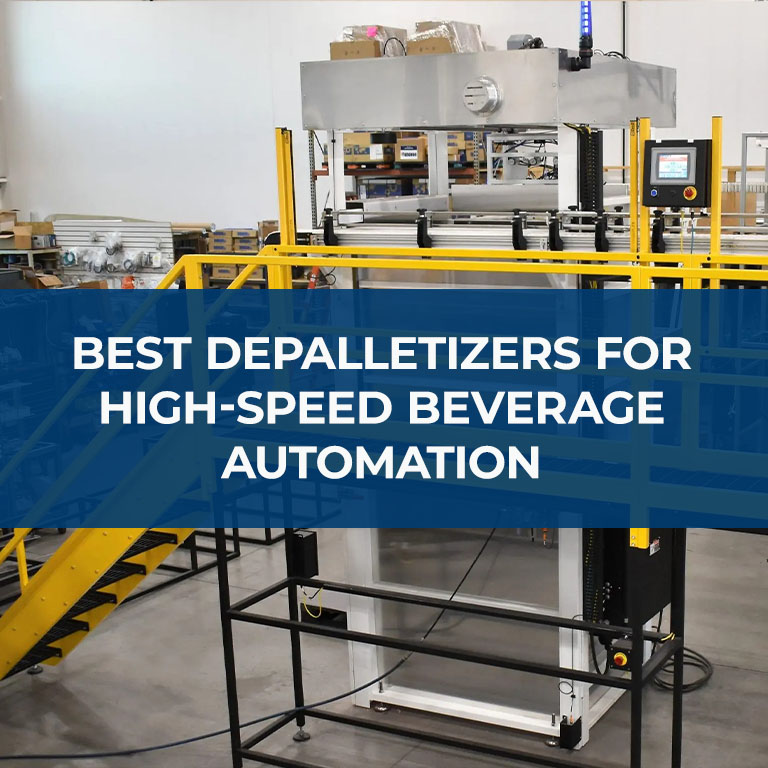
Depalletizers are machines that efficiently unload bulk quantities of bottles, cans, jars and other products from layered pallets and transfer them onto your production line. The right depalletizer can help you increase production speed, optimize labor efficiency and increase safety while minimizing any damage to your products.
Factors for Choosing a Depalletizer
Select the right depalletizer for your operations by considering these factors:
- Container type and material: Consider the nature of the materials you are handling and whether you need a machine for multiple types of containers.Some depalletizer machines are specifically designed for a particular material, such as aluminum cans, while others are more versatile. It could be more cost-effective to opt for a specialized system if you only handle one container type.
- Production speed: Each depalletizer has a maximum production speed measured by the number of containers it can transfer per minute (CPM). It is important to match the CPM to your overall line efficiency to prevent bottlenecks.
- Automation: Manually operated depalletizers require operators to use controllers and a hand crank to control the unloading process with functions like manual tilt. Automated depalletizers require minimal operator input and can automatically transition from one pallet to another. Manual depalletizers may be a more economical choice for smaller operations, short runs or for delicate containers, while automated units are better suited for large quantities.
- Workspace: Depalletizer systems occupy varying amounts of space, depending on whether they are high- or low-level systems. Size can also vary by brand, so consider this when making your decision. Also factor in any additional equipment you might need to support the transfer of containers from the depalletizer to your main production line, such as conveyors or lowerators.
- Pallet height: Full-height depalletizers can process full-sized pallets, while half-height depalletizers are ideal for half-height pallets.
- Portability: A portable depalletizer offers more flexibility to adapt your production line. These are usually half-height, which are better suited for limited floor space and have the ability to move via a pallet jack.
- Operating weight: Maximum weight capacity varies depending on the type and size of depalletizer you choose. Assess your typical item and load weight before investing in a machine.
Depalletizers for Different Materials
Some depalletizers are better suited for certain materials than others. There are also depalletizers on the market that can seamlessly transition between plastic, glass and metal containers.
What Depalletizer Do You Need for Glass?
There are many suitable depalletizers for glass bottles and jars, including full and half-height units with varying levels of automation. Fragile glass requires careful handling, so opt for a depalletizer that operates smoothly, like an automated depalletizer with a smooth lift and sweep motor. Other features to look for in a depalletizer for glass include gentle handling systems and adjustable controls to minimize breakages and maintain uptime.
Be mindful that some glass bottles and jars often weigh more than plastic alternatives and may require a depalletizer with a higher lifting capacity.
What Depalletizer Do You Need for Metal?
You can get specialized depalletizers for metal cans and containers. Aluminum is lightweight and prone to denting or marking, which requires careful processing. Depalletizers for cans usually feature sweep-style mechanisms and rotary tables to process high volumes without jamming.
For materials such as tin or steel, you will need a more general-purpose depalletizer to efficiently move containers from pallets to your production lines.
Fully automated, semi-automated and manual depalletizers are available to suit different throughput levels. Small beverage producers may benefit from a more compact depalletizer that can fit into more confined spaces while still facilitating the efficient transfer of metal cans. You may also consider a system with a rinse cage.
What Depalletizer Do You Need for Plastic?
When choosing a depalletizer for plastic containers, you must account for plastic’s flexibility. Some depalletizers feature adjustable guides to accommodate a range of plastic container sizes and shapes. Plastic is usually lighter, so a depalletizer with a lower lifting capacity may be the most cost-efficient option if you only work with a single container type.
What if You Do Not Know What Depalletizer You Need?
If you have a diverse product line or you need to be flexible, you might not know which specific system to choose. Thankfully, modern depalletizers can handle almost all of the glass, metal or plastic materials you might work with. Some automated depalletizers have a programmable logic controller (PLC) to seamlessly work with a range of container types and sizes while minimizing downtime. Alternatively, you can use a manual depalletizer with an integrated lift mechanism, which accommodates various container and pallet sizes.

Consider your long-term business goals when choosing a depalletizer. Select a system that offers scalability to adapt as your demands change, helping your operations remain efficient and competitive.
Calculate Your Return on Investment
Once you have established a shortlist of suitable depalletizers, you can make a more informed decision by calculating the ROI of each option. Here are a few points to consider:
- Uptime: A fully automated system may have a higher upfront cost than a manual depalletizer, but its ability to seamlessly switch between materials may deliver the best value for your operations if you use multiple container types or sizes. This is because you spend less time manually changing tooling or making adjustments.
- Maintenance: Manual depalletizers often have a simpler construction with features such as hand crank wheels, which may have lower maintenance costs.
- Throughput: Compare the production speeds of each depalletizer against your overall line speed. Evaluate whether a higher-speed machine would contribute to line efficiency. If you have smaller batches, a system with a lower CPM may be more cost-effective.
Find Industry-Leading Depalletizers to Fit Your Needs at Ska Fabricating
Your depalletizer plays an important role in your production line. Choosing a depalletizer that best fits your materials, production volumes and workspace is vital for optimizing operational efficiency while handling containers with care. Ska Fab offers a range of high-quality depalletizers suitable for glass, metal, and plastic containers. We provide optimal packaging line solutions across many industries. Browse our range of depalletizers available in various specifications to suit your demands.