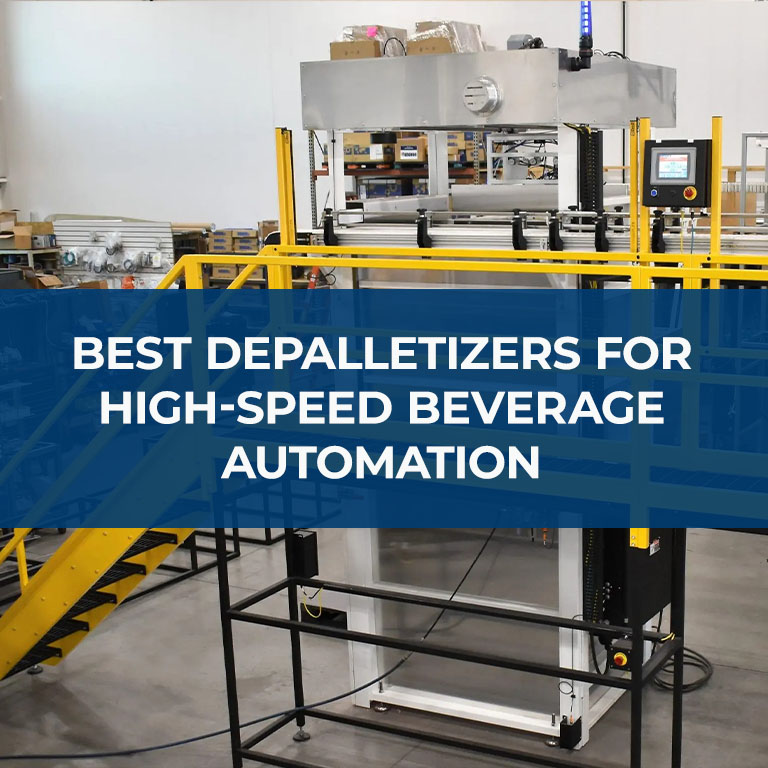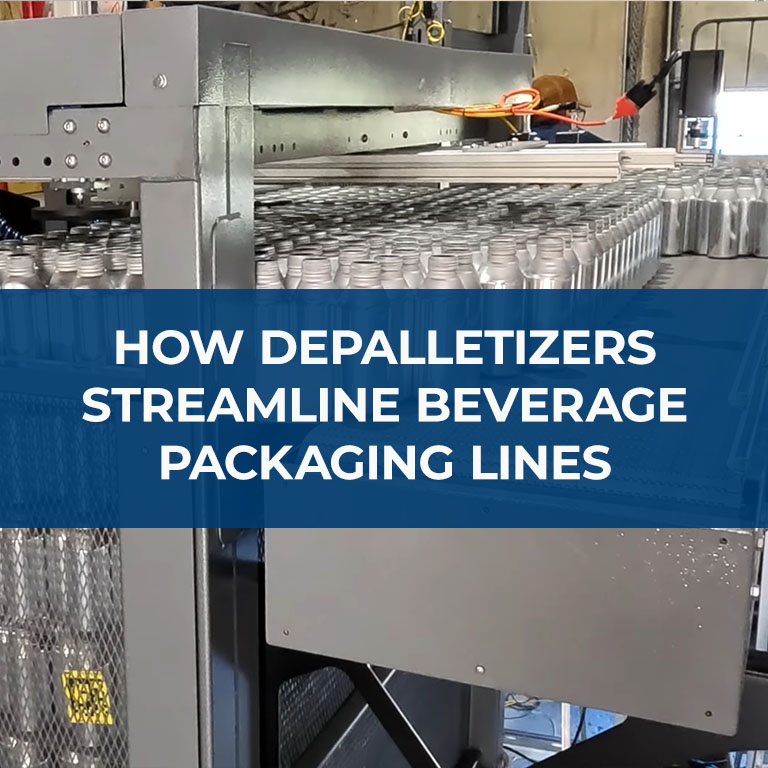

Depalletizers are among the most critical components of a packaging line because they typically set the pace for the entire packaging process. Depalletizing equipment contributes to a packaging operation’s productivity and reliability by saving time and reducing manual labor. This equipment can handle heavy loads and operate at high speeds, helping meet production demands while minimizing the risk of injuries or accidents that may occur during manual handling.
Choosing conventional or robotic depalletizing equipment is a significant decision for every manufacturing or industrial processing company. Many factors come into play, from production speed and convenient operation to container types and available space. Continue reading for a breakdown of the basics, helping you choose which option best suits your application.
What Is Depalletizing in the Manufacturing Industry?
Depalletizing is typically the first stage of a packaging operation, where containers and other raw materials arrive loaded on a pallet at a production facility. Depalletizing equipment systematically removes the containers and places them on the packaging line for further processing with minimal human intervention. Depalletizing plays a crucial role in manufacturing and processing by streamlining the workflow and improving packaging line efficiency, reducing the time and effort required to unload pallets manually.
Differences Between Conventional and Robotic Depalletizers
When choosing between a conventional and robotic depalletizer, remembering that one is not better than the other is critical. Both types remove containers from a pallet and feed them into the packaging line. The primary difference is the operation.
While conventional depalletizers typically use a sweep bar to push containers on top of a conveyor belt one layer at a time, robotic models use sensors and vision systems to help move the containers and put them onto the conveyor. Conventional systems are perfect for depalletizing a single product type at significantly high speeds. They can also work exceptionally well for operations with consistent product sizes and pallet configurations without the need for the added complexity of robotic systems.
Conventional depalletizers are often more cost-effective upfront and simpler in design. Fewer moving parts and more straightforward operation also translate to lower maintenance requirements.
Advantages of Conventional Depalletizers
Conventional depalletizing equipment has several advantages over robotic designs, including:
- Ease of use: Conventional systems require minimal operator training. They involve fewer complex components and need less programming and setup time.
- Vertical efficiency: Conventional depalletizers offer efficient operation in high-level capacities where vertical space is no concern. These systems are often well-suited for handling products stacked in a simple vertical configuration.
- High speed: Conventional designs can be engineered for rapid and continuous movement, allowing for efficient product handling at a fast pace.
- Higher scalability: Conventional systems can quickly adapt as production demands change or fluctuate. Companies can easily expand conventional designs by adding conveyors and other components without significant redesign or programming.
Benefits of Robotic vs. Conventional Depalletizers
Evaluating the cost benefits of robotic and conventional palletizing systems often boils down to the types of containers, the available space and the frequency of operation. Analyzing initial setup costs between both systems, application and usage as well as container types will help decide what type of application is best for your organization.
Making an Informed Decision
If you are still unsure which type of palletization system is best for your unique application, the professionals at Ska Fab can guide you. Our conventional systems have helped clients around the world maximize productivity while increasing quality and accuracy. Contact us online today with questions or to request additional information about our equipment.